È febbraio 1980, dalle radio risuonano i versi leggendari di Una giornata uggiosa: Chissà, chissà chi sei / chissà che sarai / chissà che sarà di noi / lo scopriremo solo vivendo.
Non è semplicemente l’ultimo capolavoro firmato Mogol-Battisti, ma anche l’idea che nulla sia definitivo e che la traiettoria di un artista vero non possa mai essere una linea retta.
L’idillio è finito, forse anche per mancanza d’amore, ma, soprattutto, per eccesso di necessità. Battisti sente che restare dov’è significherebbe tradire se stesso. E così, invece di difendere il mito, magari stancamente, sceglie la cosa più pericolosa possibile: smontarlo, ovvero essere coerente con quello che era sempre stato.
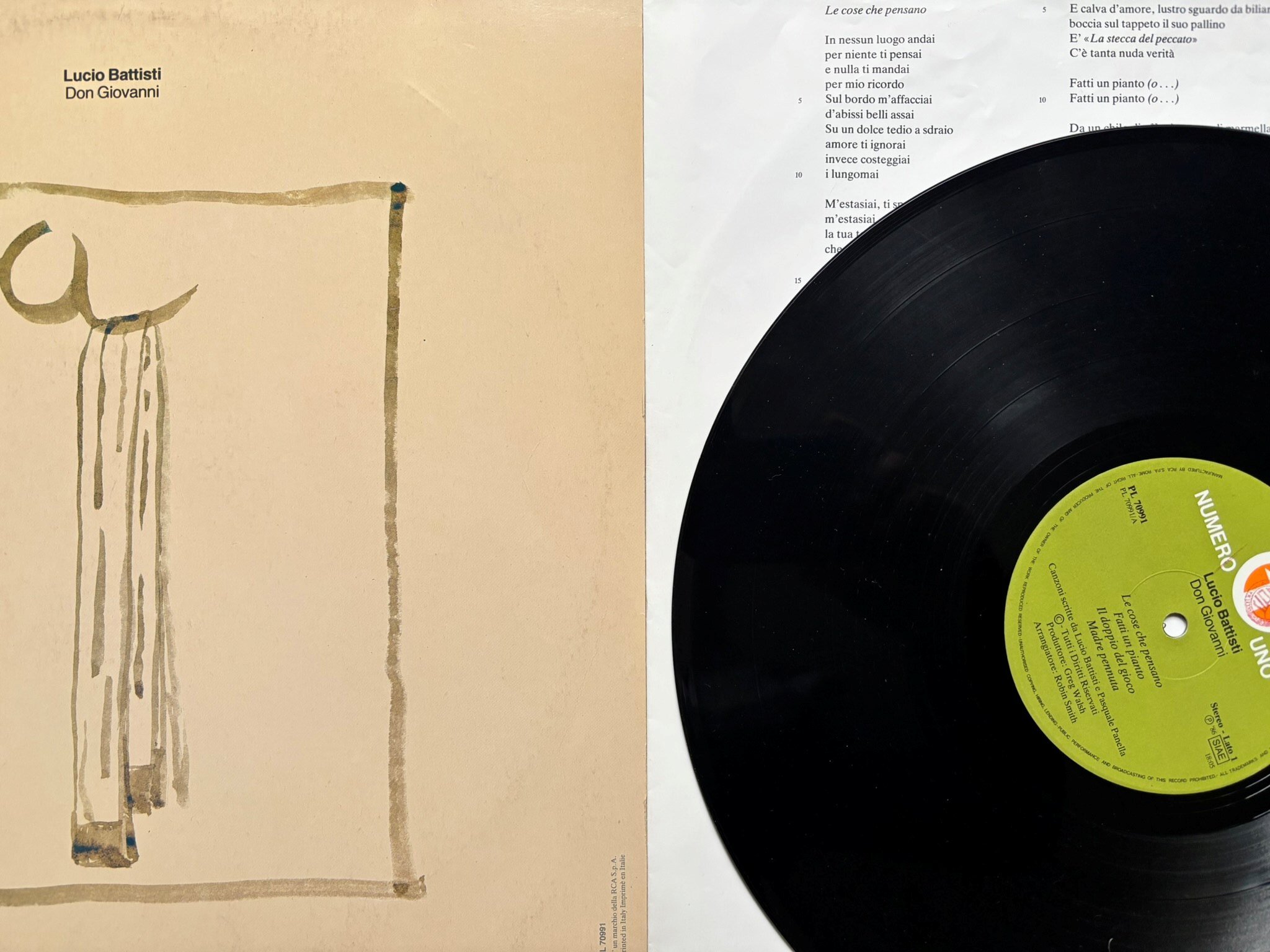
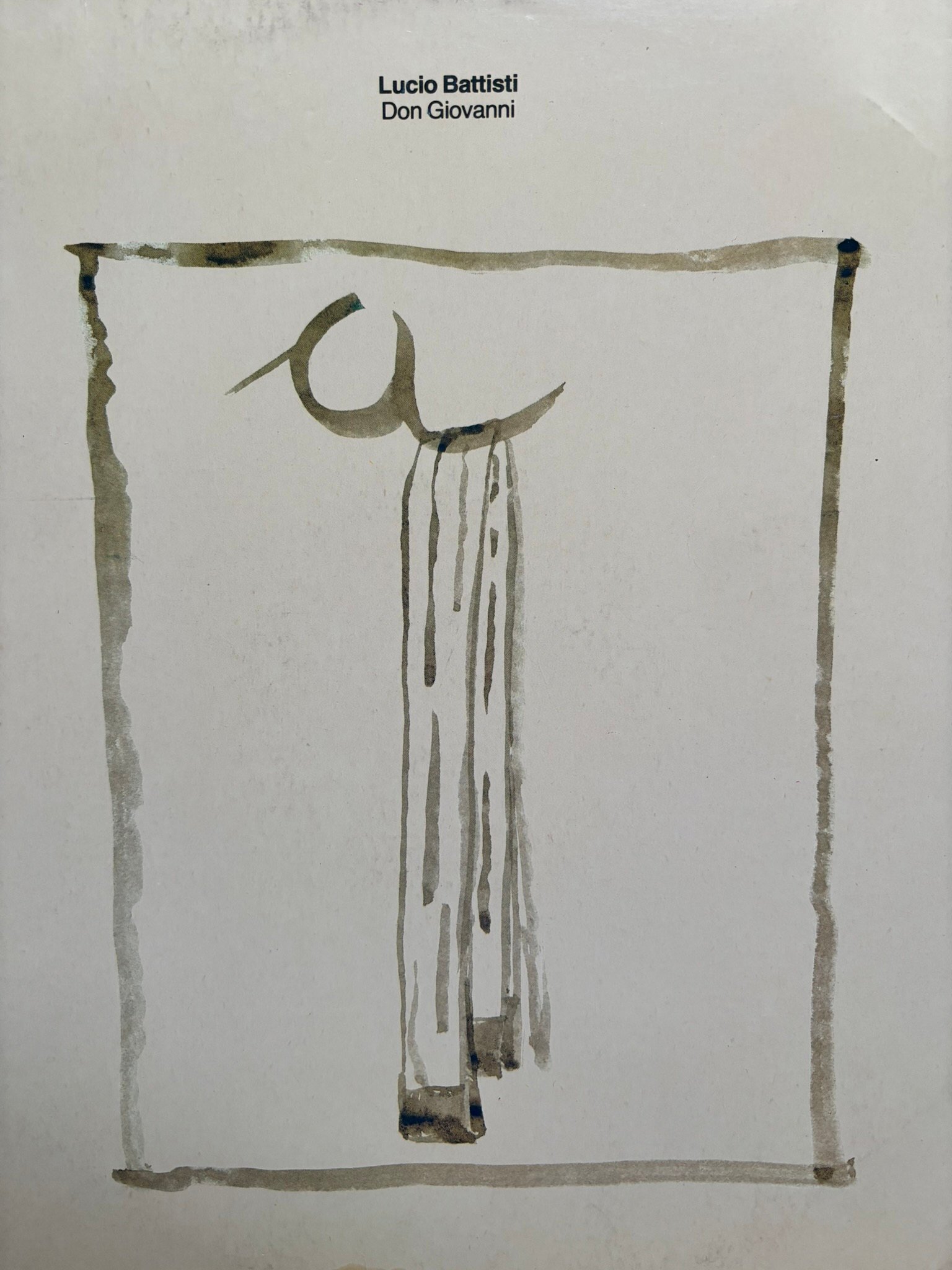
Dopo E già, disco di transizione, irrisolto, quasi un laboratorio aperto, dove i testi della moglie Grazia Letizia Veronese (Velezia) fungevano da necessaria camera di decompressione, Battisti approda a una nuova isola: l'incontro con il poeta Pasquale Panella e nel 1986 arriva Don Giovanni. Non è ancora il Battisti più radicale, ma è quello che cambia definitivamente le regole del gioco. La musica nasce prima delle parole, come nei dischi “classici”, ma le parole non sono più quelle di Mogol: entrano in scena i testi obliqui, enigmatici, di Pasquale Panella. E con loro entra un’altra idea di canzone italiana.
Don Giovanni è un disco che sembra muoversi su due piani contemporaneamente. Da una parte, melodie limpide, quasi familiari, che potrebbero appartenere al Battisti degli anni Settanta. Dall’altra, un linguaggio che non spiega più nulla, che non racconta storie ma apre spazi dove nemmeno ci si immagina, senza mai essere accondiscendente con l’ascoltatore, anzi spesso spiazzandolo. È come se la musica dicesse: “vieni, fidati”, mentre le parole rispondono: “non ti devo niente”.
Ed è proprio in questa frizione che nasce la sua forza.
La title track, Don Giovanni, è forse il punto più esplicito di tutto il disco. Non tanto per ciò che dice, ma per ciò che lascia intuire: un artista che rifiuta il ruolo di interprete passivo, di volto prestato alle emozioni altrui.
L’artista non sono io: sono il suo fumista / rivesto quello che vuoi: son l’attaccapanni.
Sembra rispondere direttamente agli anni passati, a chi lo voleva eterno prigioniero del "cantar leggero" e delle emozioni conformi. Battisti rivendica il diritto di non esistere più come icona pubblica, ma di abitare il suono come puro ricercatore.
Musicalmente, Don Giovanni è molto più ricco di quanto spesso si ricordi. Archi, fiati, pianoforte, batteria acustica convivono con un’elettronica elegante, mai invasiva. C’è jazz, c’è classica, c’è pop internazionale anni Ottanta che filtra senza imitazioni. Brani come Le cose che pensano, Equivoci amici o Che vita ha fatto mostrano un Battisti ancora melodico, ma già proiettato verso una forma di sottrazione: la voce diventa più neutra, quasi impersonale, come se stesse cercando di scomparire dentro la musica. All’uscita, il disco divide. Vende molto, arriva in cima alle classifiche, ma lascia la critica spiazzata e una parte del pubblico perplessa. È troppo strano per chi cerca La canzone dell’amore perduto, troppo elegante per chi si aspetta una provocazione. Il suo destino sarà quello di restare sospeso in una terra di mezzo: compreso da pochi, rimosso da molti.
Perché Don Giovanni non è solo un album: è l’inizio di una discografia fantasma, quella dei cinque dischi “bianchi”, ancora oggi poco raccontata, raramente citata, mai davvero metabolizzata. Un’eredità che Battisti ci ha lasciato senza spiegazioni, senza interviste, senza chiavi di lettura. Solo musica e parole.
Riascoltati oggi, quei dischi non sembrano affatto “minori”. Sembrano, semmai, (troppo) in anticipo. Misteriosi, irrisolti, stratificati. Come se Battisti avesse deciso di diventare immortale, più di quanto già non lo fosse, attraverso l’enigma.
In fondo, è questo il vero lascito di Don Giovanni e di tutti gli album “bianchi”: l’idea che un artista non debba mai coincidere con l’immagine che gli altri hanno di lui e che il senso della propria arte non sia qualcosa da spiegare, ma qualcosa da continuare a cercare, ascolto dopo ascolto.
E che forse, davvero, lo scopriremo solo vivendo.
The Artist Is Not Me: Battisti’s Don Giovanni
It’s February 1980, and the legendary verses of Una giornata uggiosa echo on the radio:
Chissà, chissà chi sei / chissà che sarai / chissà che sarà di noi / lo scopriremo solo vivendo.
It is not simply the last masterpiece signed Mogol-Battisti, but also the idea that nothing is definitive, and that the trajectory of a true artist can never be a straight line.
The idyll is over, perhaps due to a lack of love, but above all due to an excess of necessity. Battisti felt that remaining where he was would mean betraying himself. So, instead of defending the myth, perhaps tediously, he chose the most dangerous path possible: dismantling it, in other words, being consistent with what he had always been.
After E già, a transitional, unresolved album—almost an open laboratory, where the lyrics by his wife Grazia Letizia Veronese (Velezia) served as a necessary decompression chamber—Battisti arrives at a new island: the encounter with poet Pasquale Panella. In 1986, Don Giovanni is released. He was not yet the most radical Battisti, but he was the one who definitively changed the rules of the game. The music came before the words, as in the “classic” albums, but the lyrics were no longer Mogol’s: instead, the oblique, enigmatic texts of Pasquale Panella entered the scene. And with them came another idea of Italian songwriting.
Don Giovanni is an album that seems to operate on two planes at once. On one side, clear, almost familiar melodies, which could belong to Battisti of the 1970s. On the other, a language that explains nothing, tells no stories, but opens spaces one could not even imagine, never being condescending to the listener, often disorienting them. It’s as if the music says: “Come, trust me,” while the words reply: “I owe you nothing.”
It is precisely in this tension that its strength is born.
The title track, Don Giovanni, is perhaps the most explicit point of the entire album. Not so much for what it says, but for what it implies: an artist who refuses the role of passive interpreter, of a face lent to others’ emotions.
I am not the artist: I am his cartoonist / I wear what you want: I am the coat rack.
It seems to respond directly to the past, to those who wanted him an eternal prisoner of “light singing” and conforming emotions. Battisti claims the right not to exist anymore as a public icon, but to inhabit sound as a pure researcher.
Musically, Don Giovanni is much richer than is often remembered. Strings, brass, piano, acoustic drums coexist with elegant, never invasive electronics. There is jazz, there is classical, there is 1980s international pop filtered without imitation. Tracks like Le cose che pensano, Equivoci amici, or Che vita ha fatto show a still melodic Battisti, already moving toward a form of subtraction: his voice becomes more neutral, almost impersonal, as if trying to disappear into the music.
Upon release, the album divided opinions. It sold very well, reached the top of the charts, but left critics baffled and part of the audience perplexed. Too strange for those seeking La canzone dell’amore perduto, too elegant for those expecting provocation. Its fate would be to remain suspended in a middle ground: understood by few, forgotten by many.
Because Don Giovanni is not just an album: it is the beginning of a phantom discography, that of the five “white” albums, still little told, rarely mentioned, never fully digested. An inheritance that Battisti left without explanations, without interviews, without keys to interpretation. Only music and words.
Listening to those albums today, they do not seem “minor” at all. If anything, they seem (too) ahead of their time. Mysterious, unresolved, layered. As if Battisti had decided to become immortal, more than he already was, through enigma.
Ultimately, this is the true legacy of Don Giovanni and all the “white” albums: the idea that an artist should never coincide with the image others have of him, and that the meaning of one’s art is not something to explain, but something to continue to seek, listening after listening.
And perhaps, truly, we will discover it only by living.